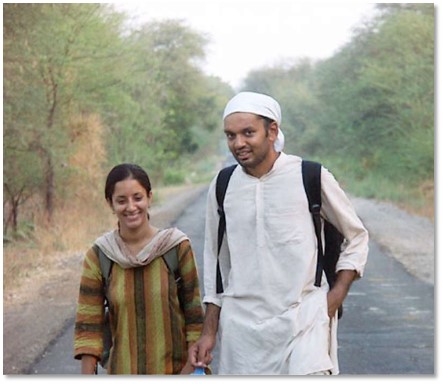
Imagine being fully alive, awake and engaged. Imagine utilizing body, mind and spirit in a rapturous three part harmony that sets feet tapping, hearts beating and souls soaring. Walking together from the self to the selfless, this is one pilgrimage to the heart of the infinite. [about the walk]

50 Items That Should Change the World

Posted on October 06, 2005 in books.

I ran into an interesting book by Jessica Williams: 50 Facts that Should Change the World.

Below are those fifty facts and some of my notes from the book:


  1. The average Japanese women can expect to live to be 84. The average Botswanan will reach just 39. During the Roman Empire, life expectancy was just 22 years; 1500 years later, it reached 33; now, Japense have the highest life expectancy that is predicted to increase. In Central and South Africa, though, US Census Bureau predicts a drop in life expectancy in 51 countries ... primarly because of the HIV/Aids pandemic. [ more ]

  2. A third of the world's obese people live in the developing world. Obesity related conditions cost the US $118 billion in the 1990s, more than double the $47 billion attributable to smoking. The type of diet we intake is cited as the chief cause.

  3. The US and Britain have the highest teen pregnancy rates in the developing world. For every 1,000 American women aged between fifteen and nineteen, there was 52.1 births, compared with 2.9 in Korea and 4.6 in Japan. UNICEF indicates that a key factor in reducing teen pregnancies is equipping young people to make informed choices.

  4. China has 44 million missing women. For every 100 baby girls born in China in 2000, there were 116.8 baby boys. In China and India, sex-selective abortions are illegal but still common. China's 'one child' policy has meant that many births go unreported; these unregistered children won't be able to, for example, go to school or receive state-funded healthcare.

  5. Brazil has more Avon ladies than members of its armed services. 450,000 personnel on active service, and 700,000 revendadoras (a.k.a. Avon ladies). Global beauty market is $95 billion and growing 7% every year. Avon's own reserach shows that 90% of Brazilian women considered beauty products to be a necessity, not a luxury. [ more ]

  6. Eighty-one percent of the world's executions in 2002 took place in just three countries: China, Iran and the USA. Gallup poll in 2003 showed that 74 percent of Americans support capital punishment for those convicted of murder. In China, most executions take place after rallies in front of massive crowds, and prisoners are often paraded through the streets on their way to their final destination. [ more ]

  7. British supermarkets know more about their consumers than the British government does. Loyalty cards, aimed to save you some bucks at the grocery counter, gather sophisticated information about your spending patterns. The problem? Such information is then sold, or used against you in court or taken by the government without your permission.

  8. Every cow in the European Union is subsidised by $2.50 a day. That's more than what 75 per cent of Africans have to live on. World Bank reports than Japense cows get $7.50 per day. Of course, government costs are passed onto the consumers in terms of milk and beef prices.

  9. In more than 70 countries, same-sex relationships are illegal. In nine countries, the penalty is death. Nine countries include Mauritania, Sudan, Afghanistan, Pakistan, the Chechen Republic, Iran, Saudi Arabia, the United Arab Emirates and Yemen. Since the Islamic revolution in Iran in 1979, more than 4,000 homosexuals have been executed. [ more ]

  10. One in five of the world's people live on less than a $1/day. Through the 1990s, there was a 7% improvement in poverty. Poverty, as it turns out, is completely avoidable. For less than 1% of the income of the wealthiest countries each year, the worst effects of poverty can be greatly diminished. At least four times between 2000 and 2003, rich countries pledged 0.7% of their income and poor countries promised political reforms for accountable implementation. As it turns out, rich didn't follow through on pledges and poor are plagued with corruption. [ more ]

  11. More than 12,000 women are killed each year in Russia as a result of domestic violence. That's one every 43 minutes. In America, by contrast, that number is 1,246 women killed by an intimate partner in 2000. It seems that massive economic and social upheavel in the post-Soviet era have left men demoralized. In general, women are five to eight times more likely to be assaulted by an intimate partner than men. [ more ]

  12. In 2001, 13.2 million Americans had some form of plastic surgery. The number of prodecures has more than doubled since 1997. More than 70% of plastic surgery patients now earn less than $50,000 per year. The industry now even boasts its own TV show -- Extreme Makeover. [ more ]

  13. Landmines kill or maim at least one person every hour. All around the world, more than 100 million remnants of conflicts past and present lie quietly in the ground, waiting for action. In more than 60 countries, landmines litter the earth. They are said to be popular because they're cheap to install. People killed and maimed by landmines are largely powerless and the countries most heavily mined are among the world's poorest. [ more ]

  14. There are 44 million child labourers in India. Worldwide, the UN Labour Organization estimates 246 million child labourers aged between five and seventeen. Of those, 171 million work in hazardous conditions; roughly 8.4 million are involved in what ILO calls 'the unconditional worst forms of child labour.'

  15. People in industrialised countries eat between six and seven kilograms of food additives every year. In 2000, the food industry spends around $20 billion on making our food look prettier, taste nicer and last longer. Food additives are chemicals meant to keep our food fresh longer to prevent frequent trips to the market and reduces our time in the kitchen via 'convenience' foods. Worldwide market in flavourings is worth $3.6 billion a year. Artificial sweetners are another profitable sector.

  16. The golfer Tiger Woods is the world's highest paid sportman. He earns $78 million a year -- or $148 every second. 71 of that 78 million comes from sponsorships. Tigers Woods is paid $55,000 a day to wear Nike caps; a Thai worker is paid $4 a day to make them.

  17. Seven million American women and 1 million American men suffer from eating disorder. Most common is anorexia, whose psychological nature wasn't uncovered till early 20th century. Top fashion models now weigh 25% less than the average American woman. Average Hollywood starlet now wears an American size 2 dress on the red carpet -- which has the same measurements as a dress made for a ten-year-old girl. [ more ]

  18. Nearly half of the British fifteen-year-olds have tried illegal drugs and nearly a quarter are regular cigarette smokers. Those smokers consume an average of 50 cigarettes per week. Britain's teenagers are also drinking twice as much as they did a decade ago. 49% of American 12th graders said they had drunk alcohol in the last 30 days. Underage drinking costs the US $53 billion a year. [ more ]

  19. There are 67,000 people employed in the lobbying industry in Washington DC -- 125 for each elected member of Congress. Lobbyists spend their day trying to influence government policy. Corporates, non-governmental organizations, and special interest groups, all have lobbyists who were paid $1.55 billion in 2000 to sway politician votes. [ more ]

  20. Cars kill two people every minute. In 1930, a million cars on the Britain roads led to 7300 deaths; in 1999, 27 million cars led to less than 3650 deaths. Same with the US. Now, people most affected by road accidents are world's poor; 67% of road deaths occur every year in developing countries and 67% of those killed are pedestrians. New cars with safety checks, safety components like airbags or ABS breaks, well-maintained roads, laws against drinking and driving, are all cited as reasons why developed countries aren't as affected.

  21. Since 1977, there have been nearly 80,000 acts of violence or disruption at abortion clinics in North America. [ more ]

  22. More people can identify the golden arches of McDonalds than the Christian cross. Survey of 7,000 people in six countries (including the US) showed that the Shell oil logo, the Mercedes badge and the five Olympic rings were recognized far more widely than the Christain cross. In Britain, less than 20% said they were influenced by religion; churches complain consumerism is replacing faith. In America, 92% believe in God and 33% attend a place of worship at least once a week.

  23. In Kenya, bribery payments make up a third of the average household budget. A request for 'kitu kidogo' (something small) is common in Kenya; Kenyans say its hard to get anything without bribery. Corruption further hurts poor countries because it deters foreign investment. [ more ]

  24. The world's trade in illegal drugs is estimated to be worth around $400 billion -- about the same as the world's legal pharmaceutical industry. About 200 million around the world abuse drugs. In Netherlands, marijuana is sold through 'coffee shops' and the amount sold to each customer is regulated by police; interestingly, while 37% of Americans admit to using marijuana, only 16% of the Dutch had done so. [ more ]

  25. A third of Americans believe aliens have landed on Earth. Not just the US -- a 1999 poll in Britain showed that 61% of British teenagers believed in aliens and UFOs. 80% of Americans thinks that the government is hiding information on this topic. UFO visits, interestingly, have only been widely reported in the last 50 years -- a mere blip in a planetary history that spans 4 billion years.

  26. More than 150 countries use torture. That's more than two thirds of all the countries. [ more ]

  27. Every day, one in five of the world's population -- some 800 million people -- go hungry. Incredibly, this is not caused by food shortages. The world produces enough food each year to feed all its inhabitants. Healthy diet requires 2,500 calories a day; an American consumes 3,600 calories a day while a Somalian gets 1,500. Nobel laureate Amartya Sen says it's because poor people have no money to secure a constant food supply, and no resources to grow their own food. [ more ]

  28. Black men born in the US today stand a one in three chance of going to jail. In June 2002, the number of people behind bars hit 2 million and the US overtook Russia as the world's largest prison population. One in every 37 Americans has spent time in jail, up from one in 53 in 1974. For children born in 2001, a white male has 1 in 17 chance of going to jail; hispanics are 1 in 6, blacks are 1 in 3. Black people make up 12.9% of the US population. Sentencing project also reports that 70% of those sentenced in state prisons were convicted of non-violent crimes, of whom drug offendors were 57%. Drunk driving is the most frequent category of arrests in America with 1.8 million each year; drunk drivers kill 22,000 people, yet punishment for drunk-driving is a misdemeanour (punished by fines) while posession of drugs gets upto 5 years in jail. It costs the US $30,000 to keep a prisoner in jail for a year.

  29. A third of the world's population is at war. In 2002, 30 countries around the world were fighting in 37 armed conflicts -- a combined population of 2.29 billion people. In Congo, for example, a conflict often referred to as 'Africa's world war' claimed more than 3 million lives between 1998 and 2002 -- either as a direct result of fighting or through disease and malnutrition.

  30. The world's oil reserves could be exhausted by 2040. Oil's biggest role is power generation. Most electricity in the developed world is generated using coal, natural gas or petroleum; but British government, for example, has said that by 2010, at least 10% of its energy needs to come from renewable sources like water, wind and sun. In the US, automative fuels account for more than half of US oil consumption; in 1999, Americans drove a whopping 2.6 trillion miles -- enough for 14,000 round trips to the Sun.

  31. Eighty-two percent of the world's smokers live in developing countries. Every year, nearly 5 million people die as a result of smoking. It is the number one preventable cause of death in the world. 500 million people alive today will die of tobacco-related diseases. In 1955, 56% of US men smoked; today it's 25%. Before import of tobacco-based products in 1996, 26% of Taiwanese had tried smoking; now, it's 48% and quickly rising. WHO reports that tabacco advertising in Cambodia rose 400% during 4 years of the 1990s; in Malayasia, 20-25% of all advertising is now tabacco related. Women and young people in developing countries are the current targets for tobacco companies.

  32. More than 70 per cent of the world's population have never a dial tone. Researchers estimate that 800 megabytes of information is produced every year for every person on the planet; the average American spends 46% of their time in accessing that information; in 2001, more than half of the US population used the Internet and over 600 million users worldwide had access. In Africa, though, less than 1% of the 800 million even had a computer, 1 in 4 people own a radio and 1 in 40 have a telephone. Finland, with a population of 5 million, has more Internet users than the whole of Latin America. In the US, 86% of families earning over $75,000 per year has Internet access, whereas just 12% of households earning less than $15,000 per year had access. On the flip side, within just five years, 60% of South Korean households have broadband Internet.

  33. A quarter of the world's armed conflicts of recent years have involved a struggle for natural resources. More than 5 million died as a result of these conflicts in the 1990s. Congo had deposits of gold, diamonds and mineral ore named coltan (used in mobile phones and computers). President of the rebel group in Rwanda: "We need to maintain the soldeiers. We need to pay for services ... we raise $200,000 per month from diamonds. Coltan gives us more: a million dollars a month." In Colombia, fights are over the annual $400 million annual cocaine trades. In developing countries, 90% of fresh water is consumed by agriculture and many predict that water will be a source of much tension in the future.

  34. Some 30 million people in Africa are HIV-positive. By 2050, the disease may have claimed 280 million lives. Life expectancy in some sub-saharan countries is currently 30! China refused to acknowledge it's AIDS problem till 2002; till then, 30,000 was the number of those living with HIV in China but after that, it jumped to 1 million. Of the $70 billion is spent each year in researching new drugs, less than 10% is spent on finding soutions for 90% of the world's health problems. [ more ]

  35. Ten languages die out every year. There are about 6000 living languages in the world. Professor Steve Sutherland of University of East Anglia calculated that the past 500 years have seen 4.5% of languages die out, compared with 1.3% of birds, and 1.9% of mammals. [ more ]

  36. More people die each year from suicide than in all world's amred conflicts. WHO estimates that about a million people die each year from suicides; two thirds of them are depressed at the time of their deaths. A survey in Aids-stricken region of Uganda showed 21% of residents as clinically depressed, while another survey of a Pakistani village showed 44%. Women are more likely to attempt suicide, but men are more than four times as likely to die. By 2020, WHO predicts that depression will be the second largest contributor to the global burden of disease. [ more ]

  37. Every week, an average of 88 children are expelled from American schools for bringing a gun to class. Nearly one in three American households with children have a gun in them. In a study of 37 school shooting incidents between 1974 and 2000, two thirds of the students involved had taken their guns from their own home or that of a relative. Death rate from guns in the US is by far the highest in the developed world. Of the 639 million small arms worldwide, nearly 200 million are in the homes of Americans.

  38. There are at least 300,000 prisoners of conscience in the world. These are folks who have peacefully expressed their own beliefs and not broken the law in any way.

  39. Two million girls and women are subjected to female genital mutilation each year. Barbaric practice of cutting genitals of girls and women has to be stopped, but the complexity of the problem and secrecy surrounding it call for a very careful approach. Surveys indicate the prevalance of FGM -- most commonly found in Africa -- fell from 95% in 1995 to 89% in 2002.

  40. There are 300,000 child soldiers fighting conflicts around the world. Children under 18 are fighting in almost regions of the world, in close to 33 countries. Burma is believed to have more child soldiers than any other country with more than one fifth of its 350,000 national army listed under 18 years of age. [ more ]

  41. Nearly 26 million people voted in 2001 British General Election. More than 32 million votes were cast in the first season of Pop Idol. In 1950, 84% of Britons turned out to vote; in 2001, 60%. Worldwide, younger people are not voting. Most youngsters feel that "voting is not going to change a thing" as politicians keep on playing their games. In 2003, German government debated a proposal to allow parents to vote on behalf of their 12 years and older children to vote. The use of mobile phone and Internet are also being used to make it easy to vote; in Democratic primaries in Arizona, turned jumped 600% when the Internet voting system was introduced. [ more ]

  42. America spends $10 billion on pornography every year -- the same amount is spends on foreign aid. More than 200 new adult films are produced every week, and there are over 300,000 Internet sites on the topic. 1.5 million US hotel rooms can show adult movies, which accounts for around 80% of hotels' in-room entertainment profits. [ more ]

  43. In 2003, the US spent $396 billion on its military. This is 33 times the combined military spending of the seven 'rogue states'. In 2002, the world military budget was $794 billion. America's military expenditure is more than 33 times the combined budgets of Cuba, Iran, Iraq, Libya, North Korea, Sudan, and Syria. In 1985, at the height of the Cold War, the world spent $1.2 trillion; the 90s saw a decline, but post 9/11, the trend has reversed; the US administration plans to spend $2.7 trillion on the military over the next six years. It would cost $15 billion a year to provide basic primary healthcare to all the world's people, about $2 billion to fund famine relief and sustainable agriculture programs and about $5 billion to provide a basic education for all. [ more ]

  44. There are 27 million slaves in the world today. Bonded labor is now the most common form of slavery, affecting some 20 million people around the world. Anti-slavery groups estimate that slaves exist in every continent except Antarctica, producing goods that we in the Western World use everyday. Average slave in the American South cost $40,000 in today's money; today, a slave costs an average of just $90. [ more ]

  45. Americans discard 2.5 million plastic bottles every hour. That's enough bottles to reach all the way to the moon every three weeks. Every hour, British households throw away enough rubbish to fill the Royal Albert Hall. Each year, America produces enough plastic wrap to cling-film the state of Texas. Each Christmas, an additional 5 million tons of rubbish is generated -- 4 million of that is wrapping paper and shopping bags. China produces and discards more than 45 billion pairs of disposable chopsticks every year and cuts down 25 million trees to do it. In Bangladeshi capital Dhaka, more than 10 million plastic bags are dumped every day, clogging the city's drains. It is now said that there are two man made structures that can be seen from outer-space: the Great Wall of China, and the Fresh Kills landfill near New York. A landfill closes in the US everyday, and experts say that the country has 18 years of landfill capacity left. By 2005, 250 million computers will be obsolete and 130 million mobile phones will be discarded every year. [ more ]

  46. The average urban Briton is caught on camera upto 300 times a day. Nearly 3 million closed circuit TV's are monitoring the UK, sending images to flickering screens. With an estimated 2.5 million Britons now captured on the national DNA database and the British government's decision to press ahead with iris recognition schemes, it is possible that we may never be anonymous.

  47. Some 120,000 women and girls are trafficked into Western Europe every year.

  48. A kiwi fruit flown from New Zealand to Britain emits five times its own weight in greenhouse gases. To get us off season fruits, our food is travelling a long ways. Those kiwi fruits, for example, have travelled 20,000 kilometers, either by plane or road. Increasingly, we're becoming more and more dependent on the fuel it takes to get them to us. In the UK, 40% of all road freight is food. For every calorie of lettuce imported to the UK from America, 127 calories of fuel are used; in other words, a kilogram of California lettuce uses enough energy to keep a 100-watt light bulb glowing for eight days.

  49. The US owes the United Nations more than a billion dollars in upaid dues. [ more ]

  50. Children living in poverty are three times more likely to suffer a mental illness than children from wealthy families. Nearly 4 million British children -- one in every three -- live in poverty. That's three times below the poverty line in 1970.

That's a lot of bad news. :) Perhaps we need to make a list of 50 mind blowing people who are addressing these issues in innovative ways.


Comments ...


1.
On Oct 06, 2005 Dirk wrote:

* The golfer Tiger Woods is the world's highest paid sportman. He earns $78 million a year -- or $148 every second.

Should be, $148 every minute?

--Dirk Diggler


2.
On Oct 07, 2005 Sanjay M wrote:

I'd like to elaborate on why a lot of those issues are not bad news.

Example 1:
I feel if the Thai woman gets paid so less and is getting exploited, its certainly bad news, and hopefully someone somewhere can do something about it.

But why associate it with Tiger Woods? IMHO in the first place, their lifestyles and costs of living are different, so comparison of the numbers themselves don't make any sense. I'd say Tiger Woods has probably worked pretty hard with a lot of dedicated commitment to get where he is. Its the same case with a lot of sports stars, including our cricket stars. However, I personally find it strange that our cricket stars (just like any other super star) blatantly lie in ads. Ok, let them lie if they choose to, but why even to children's products - to countless children across the country (so many of them who consider those fellows as role models), that "Brand X is the secret of my energy" or something like that - I feel that's really bordering on the unethical.

Example 2:
The US owes the United Nations more than a billion dollars in upaid dues.

I'm sure a lot of countries owe the UN a lot of money, what can anyone do about it? :) I'm not even sure anyone should do anything about it - unless they do a PhD in global economics and study the way money moves around.
__________________________________________

Anyway in general, about bad news, there are a great number of hypocrisies in the world. For example one could come up with countless number of facts regarding the inhumane diabolical methods used by slaughter houses in general (if they have to kill anyway, there's definitely a very large room for improvement on the way they do it), and factory farming in particular; see Meatrix, FarmFacts, and Peta.

And the bizarre things that go on in the name of science, in the so called highly intellectual establishments, are simply unimaginable.

Let me not even talk about the leather industry in India, where cows are supposed to be sacred (ho ho - they're treated like vegetables - the handlers are usually stone insensitive). Or the diabolical ways in which all those cute exotic tropical birds we innocently buy as pets for our house are trapped in the wild (summary of a common technique: by mutilating one, its distress calls attracts others, then many are trapped and theyre all transported in massive numbers, most dont make it at all but anyway the profits are good enough).

Wrt animal meat/products, its not just a matter of killing (which we may argue and dismiss logically/philosophically as an inevitable part of nature or our lifestyle, etc) but its also usually a matter of lifelong torture and imprisonment.

Or coming back to humans, the really underhanded psychological techniques used in ads by the global conspiracy called the tobacco industry to lure more people into the addiction (sorry cant remember references but am 100% sure of it - just look at cigarette ads for proof, I read somewhere that some ads are even very subtly aimed to get kids/teenagers thinking about it as a "future investment"!)

This article tries to give a rational explanation to it all.

---------
Anyone familiar with the concepts of overshoot, resource depletion, global climate change, mass extinction, and related ills, wonders why the media, church groups and political leaders do not vigorously discuss these topics. By contrast, those unfamiliar with these issues assume that because they are not covered closely, the problems must not be too worrisome.
---------

What I've found so far is that in a lot of these cases, there's often a lack of a more holistic view. Try campaigning aggresively against cruelty to animals but we may end up as a result in being extremely unkind and intolerant to fellow human beings. Try fighting for the environment and we find some other unwanted rippling side-effects, like some people are ending up losing their livelihood who were depending on the industry that was doing the environmental damage, or one gets entangled in government beaurocracy or political agendas - or mired in corruption. Try fighting against corruption and one finds how tough it is for many (not all) government servants to decently educate their chilren in current times purely based on their meagre salaries. Try to get a child out of childlabor into school ad and discover that a lot of sticky social problems like the people who'd been depending on the child's income. Any of these problems are like opening a pandora's box or catching on a train of things that keep on unravelling other related things one by one.

I don't mean to sound pessimistic here, of course such problems have to be addressed, balanced solutions do exist, even for the side effects as well. And its people who are working and serving on such issues that are making our world a better place. There are so many beautiful examples right in your blog and in ijourney.org, where people have indeed crashed/bypassed through all obstacles and are actually making a difference.

Probably since my childhood but esp in recent years, I too have been smitten by a deep desire to make a difference in the world. But I've taken my time (of course also partly because of internal enemies like indiscipline, lack of focus, laziness, etc as well :-) ) after all this experimentation through various means (apart from my active career/social life etc) to figure out exactly how.

So I've been fairly conservative about deciding exactly what it is I should invest all my life energy (which I've discovered seems to be as limited/unlimited as I choose it to be!) into any particular thing.

Though this comment has gotten far too long, I've actually written only little bits here. I've left out all the religious/spiritual organisations I've been involved with since childhood, outdoor adventure (which is a means for environmental education via eco-tourism as well), education and literacy, unethical practices by the allopathic medical industry, etc. Not just in research & analysis but some modest action as well, I've gone into varying depths into all these aspects over the years.

(Hmm btw in retrospect, probably the most important point and humbling thing I understood was that whether I like it or not, the world would go on even without my help :-) Active contribution is a choice, which over time I've come to feel makes more and more sense)

Anyway, as an engineer both by profession as well as instincts, whenever I sat back to do some kind of a root cause analysis, I mostly found that what I was into was only some sort of partial solution. While I continue to involve myself in some of the above listed things whenever time/inclination permits, as a personal choice, the one single thing I've finally decided would be my primary (not only) focus, happens to coincide with a choice one man had made many decades ago, and is summarized by a line in your own blog :-) ...

You pick and choose your battles and I think Goenka has picked the right ones.


3.
On Oct 17, 2005 Janani wrote:

Thank you.


4.
On Oct 19, 2005 Anita wrote:

Very thought provoking. Thanks Nipun.


5.
On Oct 27, 2005 jakki wrote:

these facts make me disgusted to be a human being, what the hell are we doing to this planet and to the people living on it. i mean how dare we


6.
On Nov 11, 2005 neeshpal wrote:

By being more inquisitive/responsible/sensible arent we should rather be asking this question (to ourselves) that what are WE doing to make this planet a better place to live and to improve the lives of those who do not even have access to basic needs like food,shelter and education.


7.
On Nov 13, 2005 Sanjay M wrote:

I found your mom's note (http://nipun.charityfocus.org/blog/ar/wednesdays/000517.html) very relevant in this context...


8.
On Nov 13, 2005 Sanjay M wrote:

Found your mom's note (http://nipun.charityfocus.org/blog/ar/wednesdays/000517.html) very relevant in this context...


9.
On Nov 27, 2005 Extatika wrote:

To sum up link between Tiger Woods and the oppression of exploited sweatshop labourers:

1. By accepting sponsership deals from unethical companies, Tiger Woods implicitly endorses their unethical practices.

2. $7 million a year is more than anyone needs. There is absolutely no reason for Tiger Woods to need to accept an additional $71 million worth of corporate sponsership deals. He chooses not to employ any of this blood-money in an ethical or compassionate manner. Through his greed he is directly complicit in this oppression

3. Tiger Woods chooses not to use his position to either inform consumers of the reality of sweatshop labour or place pressure on unethical businesses to improve their standards. Through his inaction he is directly complicit in this oppression.

4. The money which Tiger Woods is paid by unethical businesses to wear their products is not paid to the exploited workers who make them - it's simple economics, the $55,000 a week that goes to Tiger Woods is not going to the sweatshop labourers. There is no more direct link possible.


10.
On Dec 11, 2005 Terry Horsfall wrote:

I woudl; lioke ot contact Jessicas Wiliams the author.
Can anyone give me an e-mail address for her?


11.
On Feb 04, 2007 cliff wrote:

thanks, now there is no real need to buy the book. $15 saved. :)


12.
On Apr 04, 2007 Archana wrote:

HI.........I wanna know if anybody is kind enough to give me Jessica' email ID.

THIS BOOK CAN CAUSE REVOLUTION!

My comments-
1)300,000 child soilders!?It's really a matter that needs to be changed because-Today's childern are tomarrow's citizens.

2)2.5 million tonne waste plastics every week? That too in developed country like America?It degrades America's position.

3)Matter of TIGER WOODS?His calibre deserves it.


13.
On Apr 01, 2008 Dick C. Flatline wrote:

"It would cost $15 billion a year to provide basic primary healthcare to all the world's people." Where did you get that---from the Department of Statistics Thought Up Over A Bong??? Three bucks a head wouldn't cover using WITCH doctors, you liberal twit!


14.
On Apr 01, 2008 Ali wrote:

Capital punishment is rare in the UAE and I believe it doesn't apply to homosexuality. Execution in the UAE usually applies to cases of murder, rape and drug trafficking.


15.
On May 17, 2008 mr T. wrote:

50 things that proove that humans are just stupid apes :)


16.
On May 17, 2008 Mark wrote:

About number 41:

What isnt taken into consideration is the fact only people over 18 can vote in the general election while anyone, but most importantly, under 18's can vote for pop Idol. More than 4 million under 18's will vote in for pop idol.

A better example would have been that almost twice the amount of people in the US voted for the blue M+M than in their general election.


17.
On May 17, 2008 Rich wrote:

thank you, Nipun. You are an extraordinary human being. your story both touched and inspired me.


18.
On May 19, 2008 Willy wrote:

Tiger Woods made around $120 million last year. He makes considerably more each year. The claim that only $7 million comes from tournament winnings seems a bit low considering the insane purses in tournaments these days.


19.
On Jun 09, 2008 julian l sessoms wrote:

Oh, horrors! There's a cost to being human and that's to have faults. Don't sweat it so.


20.
On Jun 12, 2008 Isa wrote:

You're confusing DEVELOPING nations with DEVELOPED nations. The UK, US, Canada, Western Europe, etc. are developed countries, not developing. The so-called "Third World" are developing countries.


21.
On Jun 13, 2008 Jillian wrote:

Isa I was just about to write the same comment.


22.
On Nov 11, 2008 ArjimusMaximus wrote:

Ha, I can tell this is from a sociologist, well, the research at least.

And just like any other time a sociologist or sociology major tells me something like this, I have to ask the question:

"So, what do you suppose we do?"

I've never gotten a halfway logical response.


23.
On Mar 24, 2009 joe wrote:

Just goes to show that some aspects of humanity are fading worldwide amongst some people. Many people would see these statistics and just brush it off as if it was nothing. I dont understand how some people can care so closely about themselves and completely ignore the impact that your decisions have on your fellow man. Once people are able to accept their personal involvement in these problems, is the only time when these problems will be solved. fixing these problems though is one of the hardest things for anyone who actively went against their government in the support of other nations is labled as a anrchist or treasonist person and possibly locked away. Hopefully things are changing for the better as more and more people become aware of these things. Thaks for the article, very insightful and thought provoking.


24.
On Apr 26, 2009 Mardi wrote:

What is wrong with these facts? Some I do not understand. Is it wrong that people attack abortion clinics, or wrong that the clinics exist? Is it wrong that most people are unfamiliar with the Cross? In some examples about how much people are paid, it isn't taking into account the cost of living. Without supportive facts, it just suggests that other countries may be better sustained.

If people today are, for the first time. living to be over forty, how is that a bad thing? The rise of reports of aliens\UFOs is more likely the result of widespread panic, media coverage, popular paranoia. Why is it necessarily a bad thing that people are caught on camera?

In the U.S., we're capitolists. People can spend their own money however they want. What difference does it make if people spend their money on porn? Besides, people have sexual needs. Porn is what seperates us from the animals by keeping us from raping each other. That and prostitution.

Is technology always better? In countries where they don't use phones or whatever, maybe it's just not an issue. Is it necessarily a bad thing? And who cares if languages die out? If no one is using them, they are obsolete.

What do the statistics on # 4 have to do with missing women? Why are the women missing?

I need this article to explain what the problems are, in the opinion of the author. Many things are not clear.


Post a Comment


Remember personal info?


Ensure you're human. :) Enter the security code you see below.
: